Mexico Street Food Guide: What to Eat and How to Eat It Safely
In this guide
Street food is not a side quest in Mexico — it is the main event, the layer of the food culture where the country actually eats every day. Eat well and safely by following one rule above all: go where the locals queue. A busy stand with fast turnover is a self-auditing kitchen. This guide covers the canonical dishes, how to evaluate a stand in ten seconds, what changes region by region, the etiquette that marks you as someone who gets it, and what everything should roughly cost.
The canon: what to eat
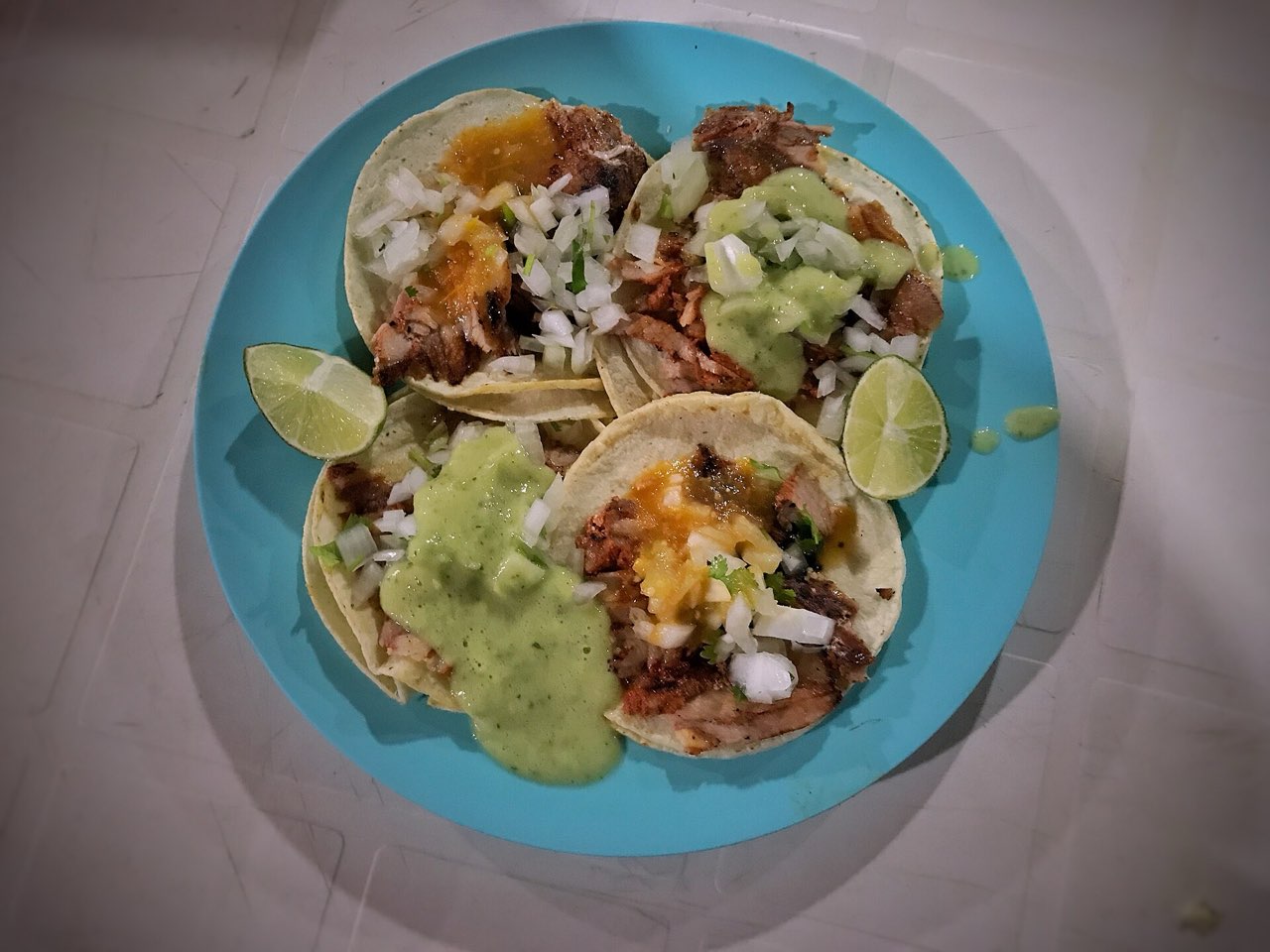
Tacos al pastor
The king. Chile-and-achiote-marinated pork stacked on a vertical spit (the trompo), shaved onto small corn tortillas, crowned with a flick of pineapple, onion, and cilantro. Born in Mexico City from Lebanese shawarma technique, perfected everywhere in the center of the country. Order “con todo” (with everything) and eat them standing up. A glowing, well-carved trompo at night is the single most reliable good-food beacon in Mexico.
Tamales
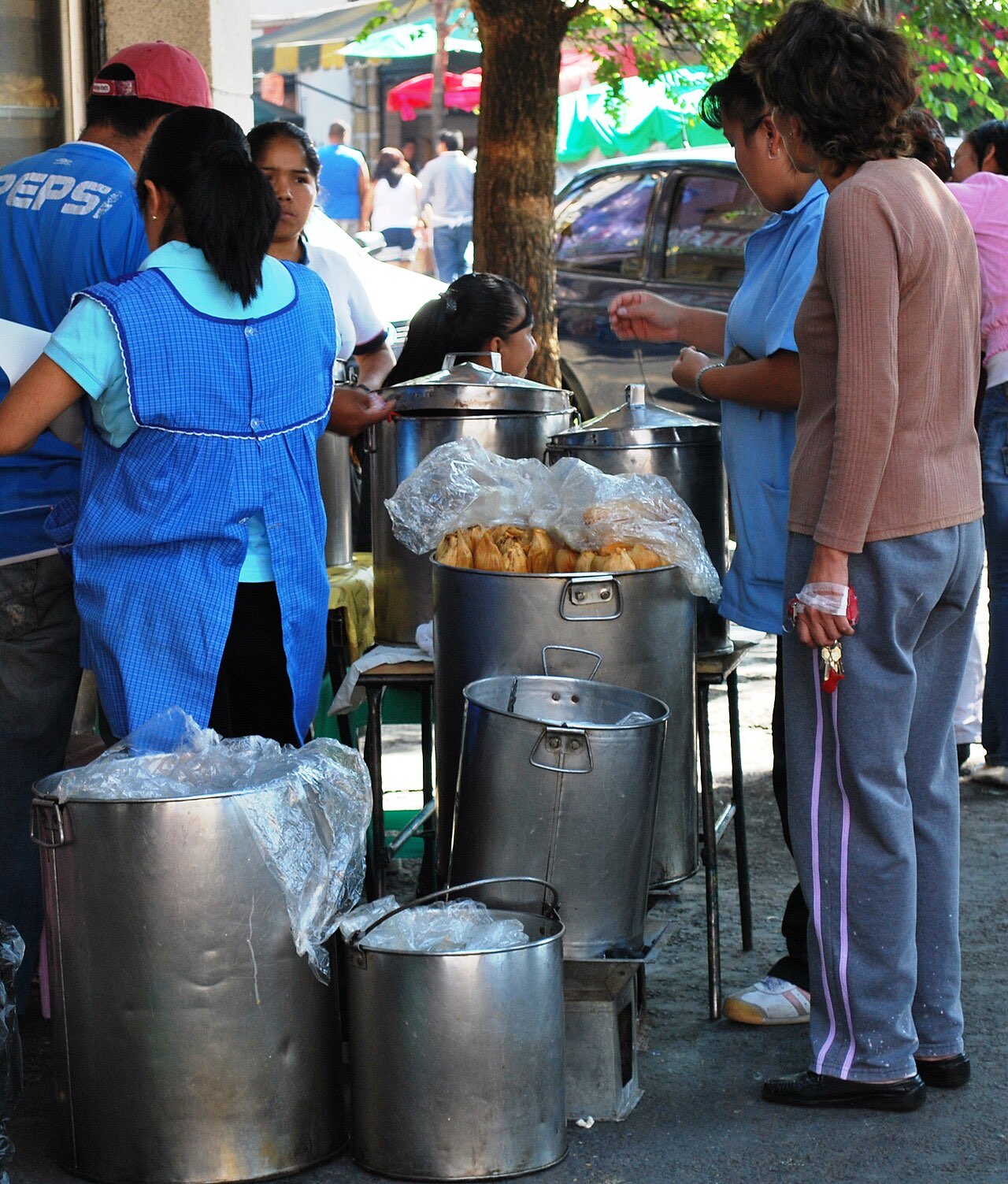
Masa steamed in corn husks (or banana leaves in the south), filled with salsa verde chicken, rajas, mole, or sweet fillings. A morning food: look for the steel steamer pots on corners from dawn. In Mexico City, the torta de tamal — a tamal in a bread roll, the famous guajolota — is the commuter carb-bomb of legend.
Elote and esquites
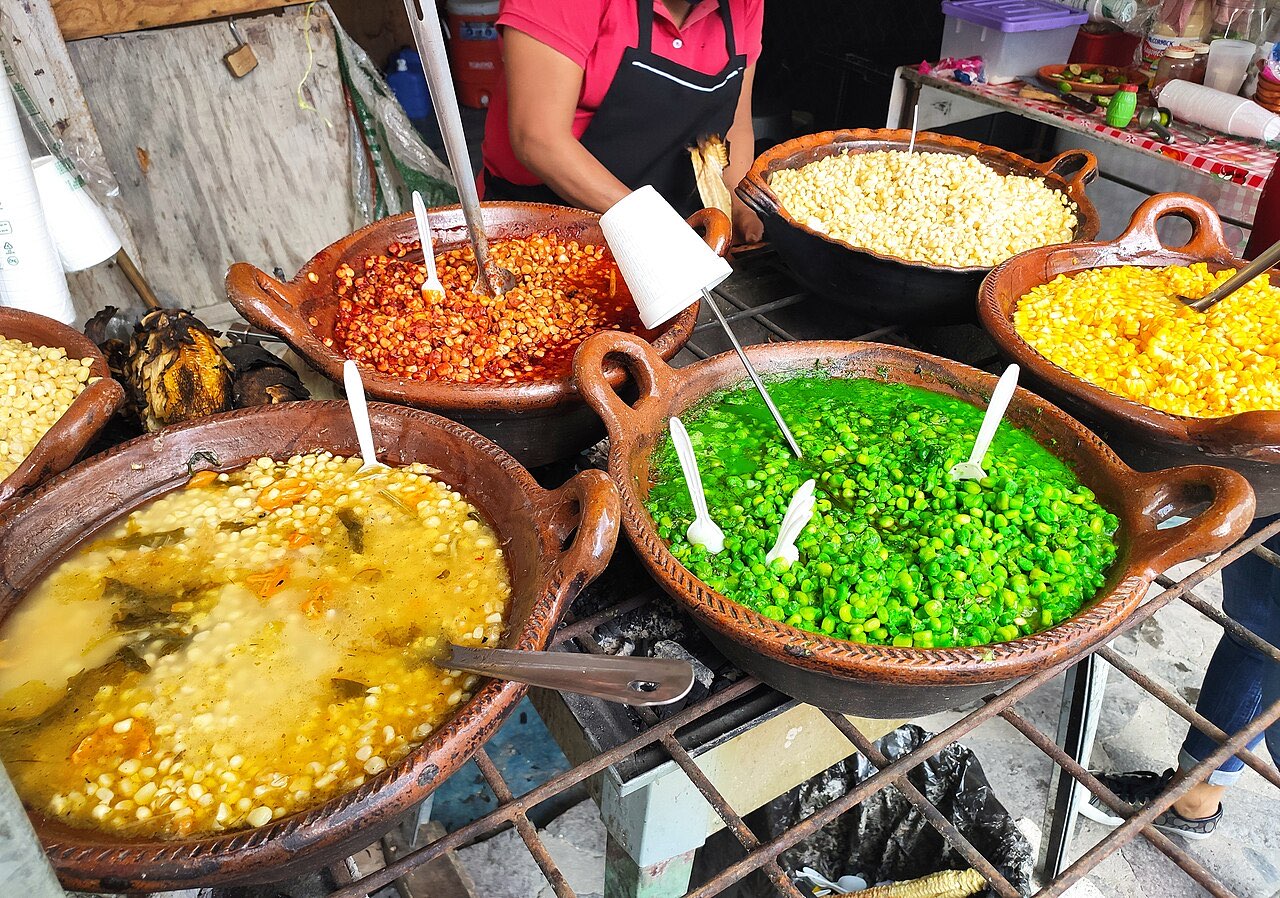
Corn two ways: elote on the cob, slathered with mayo, cheese, chile, and lime; esquites off the cob in a cup with the same dressing, eaten with a spoon. Esquites are the tidier introduction. Evening park corners are their natural habitat.
Quesadillas, sopes, and the masa universe
The antojitos family — quesadillas (in Mexico City, cheese is optional and you must ask, a running national joke), sopes, huaraches, gorditas, tlacoyos (blue-corn ovals with bean or fava filling, one of the oldest dishes in the Americas and criminally underrated). All are masa vehicles; all reward a fresh salsa bar.
And the rest of the starting lineup
- Tortas — the Mexican sandwich; a good torta de milanesa is a complete meal.
- Birria and barbacoa — weekend-morning stewed and pit-roasted meats, served as tacos or consommé.
- Marquesitas and churros — the dessert cart tier; churros filled with cajeta end an evening properly.
- Fruit carts — cups of mango, jícama, and cucumber with chile and lime, everywhere in the heat of the day.
How to pick a safe stand: the ten-second audit
- Crowd and turnover. The line is the health inspection. High volume means nothing sits around; a mobbed taquería is usually safer than an empty restaurant.
- Locals, not just tourists. Office workers and families at 8 p.m. are a strong signal; a stand surviving on foot-traffic tourists has weaker incentives.
- Hot means hot. You want food coming straight off the comal, fryer, or spit to your plate. Anything lukewarm and pre-assembled is where trouble lives.
- Watch the hands. The best stands separate money-handling from food-handling (or use tongs and bags). One person doing both with bare hands is a downgrade, not a dealbreaker — but it counts.
- Look at the salsa station. Covered containers, spoons rather than dipped tortillas, visible refills — the salsa bar tells you how the whole operation thinks.
- Trust the specialization. A cart that makes exactly one thing has made it ten thousand times.
Ease in: cooked-through, straight-off-the-heat items (al pastor, quesadillas, tamales) the first days; raw garnishes and aguas frescas once your gut has met the local microbiome. Drink bottled or filtered water, full stop. If you do get hit with a mild traveler’s stomach, oral rehydration sachets from any pharmacy plus a bland day usually resolves it.
Regional specialties worth hunting
| Region | Seek out | Notes |
|---|---|---|
| Mexico City | Al pastor, guajolotas, tlacoyos | The deepest street-food bench on Earth; see our CDMX guide |
| Oaxaca | Tlayudas, memelas, chapulines, empanadas de amarillo | Nighttime tlayuda griddles are a pilgrimage — details in our Oaxaca guide |
| Yucatán | Cochinita pibil, marquesitas, salbutes | Achiote and sour orange define the peninsula |
| Pacific coast | Fish and shrimp tacos, ceviche tostadas, pescado embarazado | Sinaloa/Nayarit-style marisco carts; beach vendors in Puerto Vallarta |
| The North | Carne asada tacos, burritos (a genuinely northern food), flour tortillas | Wheat country; beef country |
| Puebla | Cemitas, tacos árabes, chalupas | The cemita roll alone justifies the detour |
What to drink with it
The stands come with their own beverage ecosystem, and it deserves equal attention:
- Aguas frescas — the big barrel jars (vitroleros) of horchata (rice-cinnamon), jamaica (hibiscus), and tamarindo are the canonical taco companions, roughly 15–30 MXN a cup. At busy stands they turn over fast; if you are being cautious your first days, ask whether they are made with purified water (agua purificada) — at established stands they almost always are.
- Mexican Coke and sangría Señorial in glass bottles — the taquería classics; you often pay a small bottle deposit or drink it standing there.
- Champurrado — thick chocolate-masa atole, the traditional partner to morning tamales from the same cart.
- Café de olla — cinnamon-and-piloncillo spiced coffee, at markets and morning stands.
Etiquette: how to not be That Tourist
- Order clearly, then wait your turn. State quantity and type (“tres de pastor, con todo”). Stands are fast systems; be a fast component.
- Con todo means onion and cilantro — decline what you don’t want up front, not after assembly.
- Salsa with the spoon, onto your taco, not your taco into the communal container.
- Eat standing, eat immediately. Tacos are not a takeaway food; they die in transit.
- Pay at the end at taco stands — the taquero is keeping count, and so should you.
- Small bills. Arriving with a 500-peso note for a 40-peso order is mildly antisocial; break big bills elsewhere first (our money guide covers the cash logistics).
- Tipping: not expected at stands; rounding up or leaving coins at a sit-down puesto with service is a warm gesture.
Price ballparks
All approximate, interior-Mexico prices — resort zones can run double:
- Tacos: roughly 15–35 MXN each; 3–5 makes a meal
- Tamales: roughly 15–30 MXN; guajolota roughly 25–40 MXN
- Elote/esquites: roughly 20–40 MXN
- Quesadillas/sopes/tlacoyos: roughly 20–45 MXN
- Tortas: roughly 50–90 MXN
- Tlayudas: roughly 70–130 MXN
- Fruit cups: roughly 25–50 MXN
- Aguas frescas: roughly 15–30 MXN
A serious, varied street-food dinner rarely clears 100–150 MXN per person — one of the best value-for-quality ratios in world eating.
The mindset
Street food anxiety costs travelers more good meals than street food itself ever will. The stands that have fed the same corner for twenty years are professional kitchens with the walls removed — audit them like a local (crowd, heat, hands, salsa), start with the cooked canon, and work outward. By the third night you will have a regular spot, an opinion about salsa roja versus verde, and a strong suspicion that the best restaurant in the country has no chairs. For where this eating fits into a full route, see our 10-day itinerary — it was substantially planned around dinner.
Frequently asked questions
Is it safe to eat street food in Mexico?
Yes, if you choose stands the way locals do: go where there is a crowd and fast turnover, watch that hot food comes off the heat, and note whether the person handling money also handles food. Busy, high-turnover stands are often safer bets than half-empty restaurants.
What street food should I try first in Mexico?
Tacos al pastor — marinated pork shaved from a vertical spit onto small corn tortillas with pineapple, onion, and cilantro. It is the gateway street food: cheap, everywhere in central Mexico, and a reliable test of whether a stand knows what it is doing.
How much does street food cost in Mexico?
As a rough guide, tacos run 15–35 MXN each, tamales 15–30 MXN, elote 20–40 MXN, and a filling street meal rarely exceeds 100–150 MXN per person. Prices in resort zones can run double the interior.
Can I drink the water or eat raw salsa at street stands?
Skip tap water everywhere — bottled or filtered only. Salsas at busy stands turn over quickly and most travelers eat them without issue; if you want to be cautious your first days, favor cooked salsas and squeeze lime liberally.
Keep planning
- Best Time to Visit Mexico: Regions, Seasons, and Hurricanes
Best time to visit Mexico by region: the dry season (November-April) suits most trips; learn the hurricane dates for the Caribbean and Pacific coasts.
Updated Oct 2026 - Is Mexico Safe for Tourists? An Honest Regional Breakdown
A non-alarmist look at safety in Mexico — how risk varies by region, what US advisories actually mean, taxi and ATM precautions, and the scams to know.
Updated Oct 2026 - Mexico City Airport (AICM) to the City: Metro, Metrobús, Uber, Taxi
How to get from Mexico City airport (AICM) to the center: Metrobús Line 4 for 30 MXN, Metro, Uber or DiDi, authorized taxis, plus the AIFA train and traffic tips.
Updated Oct 2026