Money in Mexico: Pesos, ATMs, Cards, and Tipping Explained
In this guide
The whole game of money in Mexico comes down to three moves: withdraw pesos from bank-attached ATMs with a low-fee card, always decline the machine’s offer to convert to your home currency, and keep a cash layer for the street-level economy that cards never reached. Get those right and you will lose almost nothing to fees. This guide covers each one, plus tipping norms by situation and realistic daily budgets by travel style.
The peso, briefly
Mexico uses the Mexican peso (MXN), sign $ — which causes momentary heart attacks on menus until you internalize that the taco is $25 pesos, not dollars. Exchange rates float, so check the current rate before your trip and anchor a mental shortcut (for years, dividing pesos by ~17–20 gave a rough US dollar figure; verify what it is when you travel). Bills run 20 to 1,000 pesos; the 500s that ATMs love dispensing are annoying to break at street stands, so bleed them off at supermarkets and restaurants.
ATMs: the core strategy
Withdraw in Mexico, from bank-attached ATMs, in the largest amounts your comfort allows. Details:
- Use ATMs physically attached to real banks — BBVA, Banorte, Santander, HSBC, Scotiabank — ideally inside or beside the branch. Skip standalone machines in convenience stores and nightlife strips: worse fees and higher skimmer risk.
- Expect a local operator fee of roughly 20–90 MXN per withdrawal depending on the bank (charged on top of whatever your own bank charges). Fewer, larger withdrawals beat many small ones.
- Bring the right card if you can: debit cards that reimburse ATM fees or charge no foreign-transaction fee (offered by several US banks and fintechs) turn this entire section into a non-issue.
- Basic hygiene: use machines in daylight or inside bank vestibules, shield your PIN, and give the card slot a wiggle — loose hardware is the classic skimmer tell.
“Accept the conversion?” — always decline
At some point a Mexican ATM (or card terminal) will offer to charge you in your home currency, often framed helpfully: “Continue with conversion? Guaranteed rate!” This is dynamic currency conversion (DCC), and it is the single most reliable rip-off in travel banking. The machine’s “guaranteed rate” typically embeds a markup of several percent over the rate your own bank would give you.
The rule has no exceptions: choose PESOS / MXN / “without conversion” every time, on ATMs and on card terminals alike. If a waiter’s handheld shows an amount in your home currency, ask them to run it again in pesos. Declining DCC on a trip’s worth of transactions can save more than every other tactic in this guide combined.
Cards vs cash: who takes what
| Venue | Cards? | Notes |
|---|---|---|
| Hotels, chain stores, OXXO | Yes, near-universal | Visa/Mastercard everywhere; Amex spottier |
| Mid-range and upscale restaurants | Yes | Tip can usually go on the card |
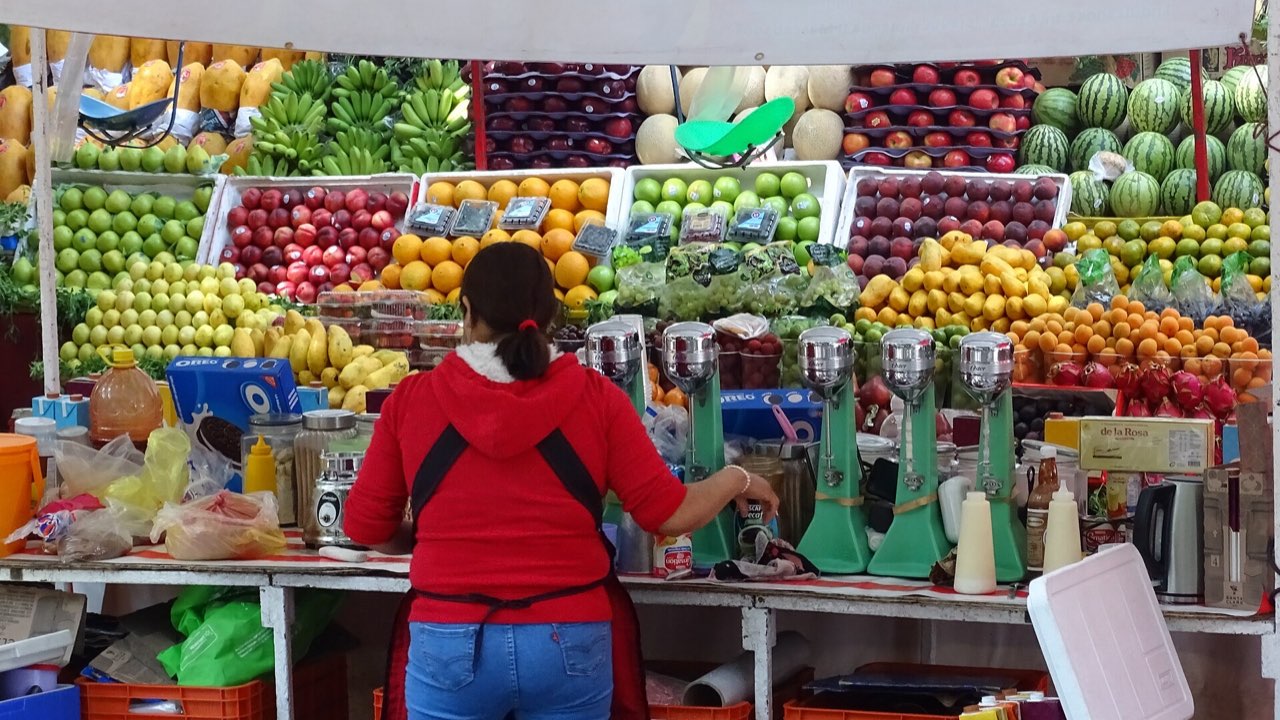
| Street food, market stalls | Cash only | Small bills and coins |
| Taxis, colectivos, local buses | Cash only | Uber/Didi charge in-app |
| Museums, archaeological sites | Mixed | Some big sites are card-friendly; carry cash backup |
| Tips (housekeeping, porters, tours) | Cash | Pesos strongly preferred |
Practical equilibrium: roughly 500–1,500 MXN in your pocket at any time, split between a spending stash and a reserve, with cards for everything that takes them. Contactless and Apple/Google Pay work broadly at card-accepting venues. Notify your bank of travel if it still requires that, and carry a second card stored separately from the first — a swallowed or frozen card with no backup is the actual worst-case scenario here.
Tipping norms by situation
Tipping (la propina) is a real part of service income in Mexico. Norms, in pesos, at typical levels:
- Sit-down restaurants: 10–15% (15% for good service, more only for exceptional). Check whether servicio was already added — uncommon outside resort zones, but it happens.
- Street stands and market comedores: not expected; rounding up or leaving coins is a kind gesture.
- Bars: 10–15% on the tab, or 10–20 MXN per round at casual spots.
- Housekeeping: roughly 20–50 MXN per night, left daily (staff rotate).
- Porters/bellhops: roughly 10–20 MXN per bag.
- Airport/grocery baggers and gas-station attendants: small change — 5–10 MXN; baggers are often unsalaried and work for tips.
- Tour guides: roughly 50–150 MXN per person for a day tour, more for private guides who earned it.
- Uber/Didi: optional; in-app or a small cash tip is appreciated.
- Restrooms with attendants: the posted 5–10 MXN.
Tip in pesos, in cash, whenever you can — dollar tips force the recipient to eat an exchange cost.
Daily budgets by tier
Rough per-person daily figures, excluding intercity transport and assuming double-occupancy lodging. Treat all of these as approximate planning numbers, not quotes:
| Tier | Lodging (per person) | Food & drink | Local transport & activities | Daily total |
|---|---|---|---|---|
| Budget | Roughly $10–25 USD (hostels, guesthouses) | Roughly $10–20 (street food, markets) | Roughly $5–15 | ~$25–60 USD |
| Mid-range | Roughly $35–75 (boutique hotels) | Roughly $25–50 (mix of restaurants) | Roughly $15–35 | ~$75–160 USD |
| Premium | Roughly $120–300+ | Roughly $60–150 | Roughly $40–100+ | ~$220–550+ USD |
Regional skew: Oaxaca and the colonial highlands stretch money furthest; Mexico City spans the full range; beach resort zones (Los Cabos, the Riviera Maya, high-season Puerto Vallarta) run 20–50% above the interior. For how these numbers play out across a real route, see the cost table in our 10-day itinerary.
Before you go: the five-minute checklist
- Order or confirm a no-foreign-transaction-fee card — ideally one debit card for ATM withdrawals and one credit card for purchases, issued by different banks.
- Check your daily ATM withdrawal limit and raise it if needed; combined with Mexican per-transaction caps, a low limit forces extra fee-bearing withdrawals.
- Set up your bank’s app with the card-freeze feature enabled — instant freezing turns a lost card from a crisis into an inconvenience.
- Store card numbers and your bank’s international collect-call number somewhere that is not your wallet.
- Skip the airport currency counter at home; if landing cashless feels uncomfortable, exchange only enough for a coffee and a contingency, and do the real withdrawal from a bank ATM on arrival.
Quick answers to the remaining questions
- Can I pay in US dollars? Some border and resort businesses accept them at unfavorable rates. Paying in pesos is always better; treat dollar acceptance as an emergency valve, not a plan.
- Money changers (casas de cambio)? Fine for converting leftover cash; compare posted rates. Still generally worse than the ATM strategy.
- Haggling? Expected in artisan markets (open somewhere below asking, settle around 60–80%), not in food markets or stores with posted prices.
- Card fraud? Keep the card in sight during transactions — handheld terminals brought to your table are the norm and solve this. Card-related scams and the DCC trick both appear in our safety guide alongside the other classics.
- How much cash for street eating? A big night of tacos rarely clears 150 MXN a head — see the price ballparks in our street food guide.
Master the three moves — bank ATMs, decline the conversion, keep a cash layer — and money in Mexico becomes what it should be: a background detail of a very good trip.
Frequently asked questions
Should I exchange money before going to Mexico?
No, or only a token amount. Airport and home-bank exchange rates are consistently worse than simply withdrawing pesos from a bank ATM in Mexico with a low-fee debit card. Land with a card, withdraw at a bank ATM in the arrivals hall or in town, and skip the currency counter.
What does 'accept the conversion' mean at a Mexican ATM?
It is dynamic currency conversion — the machine offers to charge your card in your home currency at its own inflated exchange rate. Always decline it and choose to be charged in pesos (MXN); your bank's rate will almost always be significantly better.
How much should I tip in Mexico?
Tip 10–15% at sit-down restaurants (15% for good service), 10–20 MXN per bag for porters, 20–50 MXN per night for housekeeping, and small change for grocery baggers and gas attendants. Tipping street taco vendors is not expected, and Uber tips are optional but appreciated.
Is Mexico a cash country or a card country?
Both, split by venue: hotels, mid-range restaurants, and chain stores take cards almost universally, while markets, street food, small shops, buses, and tips run on cash. Plan on carrying roughly 500–1,500 MXN in cash at any given time.
Keep planning
- Best Time to Visit Mexico: Regions, Seasons, and Hurricanes
Best time to visit Mexico by region: the dry season (November-April) suits most trips; learn the hurricane dates for the Caribbean and Pacific coasts.
Updated Oct 2026 - Is Mexico Safe for Tourists? An Honest Regional Breakdown
A non-alarmist look at safety in Mexico — how risk varies by region, what US advisories actually mean, taxi and ATM precautions, and the scams to know.
Updated Oct 2026 - Mexico City Airport (AICM) to the City: Metro, Metrobús, Uber, Taxi
How to get from Mexico City airport (AICM) to the center: Metrobús Line 4 for 30 MXN, Metro, Uber or DiDi, authorized taxis, plus the AIFA train and traffic tips.
Updated Oct 2026