Mexico City First-Timer's Guide: Where to Stay and What to See
In this guide
Staying in Roma Norte or Condesa, planning four full days, and mixing the metro with Uber will get you 90% of the way to a great first trip to Mexico City. The city is enormous — over 20 million people in the metro area — but the parts most visitors care about cluster into a handful of walkable neighborhoods connected by cheap transport. This guide covers where to stay, what to see grouped by area, how to get around, and the one physical factor almost everyone underestimates: altitude.
Where to stay: the four neighborhoods that matter
First-time visitors should pick from four areas. Each has a distinct personality, and picking the wrong one for your travel style is the most common first-trip mistake.
| Neighborhood | Best for | Vibe | Typical hotel/Airbnb cost (approx.) |
|---|---|---|---|
| Roma Norte | First-timers, food lovers | Leafy, café-dense, walkable | Roughly $60–150 USD/night |
| Condesa | Couples, runners, park people | Quieter, residential, Art Deco | Roughly $60–150 USD/night |
| Centro Histórico | Sightseeing maximalists, budget travelers | Grand, chaotic, historic | Roughly $30–90 USD/night |
| Polanco | Luxury travelers, fine dining | Polished, upscale, quieter streets | Roughly $150–400 USD/night |
Roma Norte
If you only take one recommendation from this guide, stay in Roma Norte. It has the city’s densest concentration of good restaurants, coffee shops, and mezcal bars, and it sits between the Centro and Chapultepec, which keeps your transit times short in both directions. Streets like Colima, Orizaba, and Álvaro Obregón are pleasant to walk at almost any hour.
Condesa
Condesa borders Roma and shares most of its virtues with a calmer register. It wraps around Parque México and Parque España, two of the loveliest urban parks in Latin America. Choose Condesa over Roma if you prefer quiet mornings, tree-lined running loops, and slightly fewer crowds; the trade-off is a shorter list of standout restaurants, though “shorter” is relative — you will still not run out.
Centro Histórico
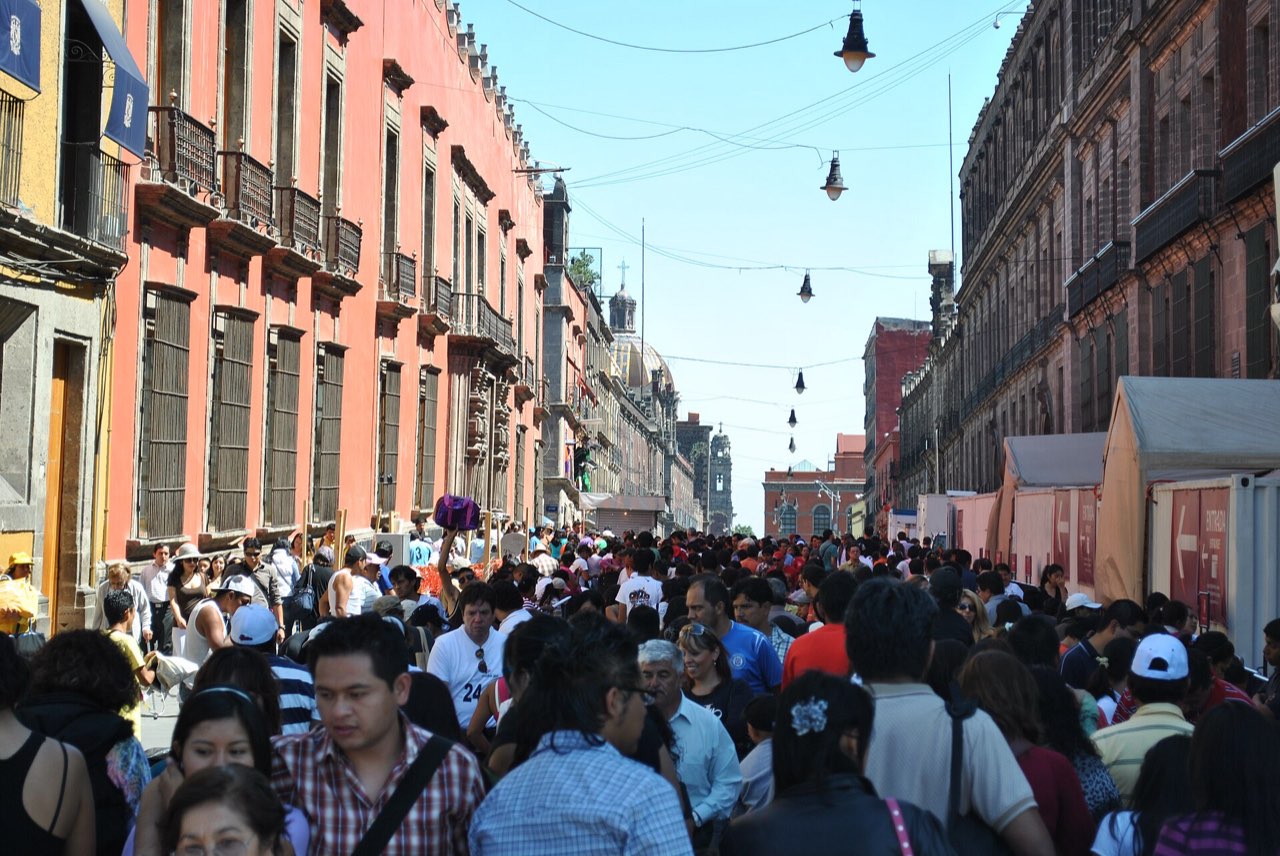
The Centro puts you on top of the biggest sights: the Zócalo, the Metropolitan Cathedral, the Templo Mayor ruins, and the Palacio de Bellas Artes. It is dramatic and historically dense, but it empties out and gets sketchier at night in some pockets, and the noise level is real. Good for a short trip focused on sightseeing; less ideal as a base for a week.
Polanco
Polanco is the upscale option — luxury hotels, designer shopping on Avenida Presidente Masaryk, and several of the restaurants that put Mexico City on global best-of lists. It is safe and comfortable but feels less distinctly chilango than Roma or Condesa, and you will Uber to most sights.
Top sights, grouped by area
Mexico City punishes bad geographic planning. Traffic is heavy, and the sights are spread across a wide area, so group your days by neighborhood.
Day grouping 1: Centro Histórico
- Zócalo — one of the largest city squares in the world, flanked by the cathedral and the National Palace (home to Diego Rivera’s murals).
- Templo Mayor — the excavated ruins of the Aztec main temple, right off the Zócalo, with an excellent site museum.
- Palacio de Bellas Artes — the marble Art Nouveau/Deco landmark; the Sears café across the street has the classic photo view of its dome.
- Torre Latinoamericana — the observation deck gives you the scale of the city in one look.
Day grouping 2: Chapultepec and Polanco
- Museo Nacional de Antropología — arguably the best museum in the Americas. Give it a minimum of three hours; the Mexica (Aztec) and Maya halls alone justify the trip.
- Chapultepec Castle — the only royal castle in North America, with sweeping views down Paseo de la Reforma.
- Chapultepec Park — bigger than Central Park; the first section around the castle and museum is the part worth your time.
Day grouping 3: Roma, Condesa, and Coyoacán
- Spend a slow morning walking Roma Norte and Condesa — markets, cafés, Parque México.
- In the afternoon, head south to Coyoacán for the Frida Kahlo Museum (book tickets online well in advance — it sells out days ahead) and the cobblestoned plazas around Jardín Centenario.
Day grouping 4: a day trip
- Teotihuacán — the monumental pyramid complex about an hour northeast of the city. Go early; the site is exposed and heats up by late morning.
- Xochimilco — the canal-and-trajinera (painted boat) experience in the south of the city. It is touristy and that is fine; go with a group and it is a genuinely fun afternoon.
If Mexico City is your gateway to a longer trip, it pairs naturally with Oaxaca — see our Oaxaca City guide and our full 10-day Mexico itinerary that links the two.
Getting around: metro, Metrobús, and Uber
Uber is the default for most visitors, and it works. Rides across the central neighborhoods typically run roughly 60–150 MXN, cars arrive quickly, and you avoid the classic street-taxi problems (no meter, negotiated fares). Didi operates here too and is often marginally cheaper.
The metro is astonishingly cheap — a flat 5 MXN per ride (the rechargeable card costs about 15 MXN; Metrobús is about 6 MXN, and the Line 4 airport service about 30 MXN) — and is the fastest option when traffic is bad, which is most of the time. It gets very crowded at rush hour; keep valuables in front pockets and avoid it with luggage. Line 1 and Line 2 cover most tourist movement.
The Metrobús (dedicated-lane buses on Insurgentes and Reforma) splits the difference: cheap, above ground, and easier to navigate than the metro for newcomers. You will need a rechargeable transit card, sold at station machines, which also works on the metro.
Street taxis: skip them. Not because every ride goes wrong, but because Uber removes the risk entirely at nearly the same price. For more on this and other practical safety questions, see our honest guide to whether Mexico is safe for tourists.
The altitude note everyone skips
Mexico City sits at roughly 2,240 meters (7,350 feet) — higher than Denver. Most people feel it as mild shortness of breath on stairs, faster fatigue, quicker dehydration, and stronger effects from alcohol for the first 24–48 hours. It is rarely serious, but it is real. Plan a lighter first day, drink more water than feels necessary, and do not schedule Teotihuacán (which involves a lot of walking in full sun) as your day-one activity.
How many days do you need?
Four full days is the honest answer for a first visit:
- Centro Histórico
- Anthropology Museum + Chapultepec
- Roma/Condesa morning + Coyoacán afternoon
- Teotihuacán or Xochimilco day trip
Three days works if you cut the day trip. Five or six days lets you add the San Ángel Saturday bazaar, Lucha Libre at Arena México, or simply more unhurried eating — which, in this city, is a legitimate itinerary item. Budget-wise, expect roughly 800–1,500 MXN per day per person for food and transport at a mid-range level, well below US prices for a comparable quality of eating.
When to go
The dry season, roughly November through April, is the most reliable window: sunny days, cool nights, minimal rain. May is the hottest month. The rainy season (June–October) is not a dealbreaker — rain usually arrives as a hard late-afternoon downpour rather than all-day drizzle — and hotel prices soften. Air quality is at its worst in the late dry season (March–May).
Common first-timer mistakes
- Underestimating distances. “It’s in Mexico City” can still mean 90 minutes away. Group by neighborhood.
- Skipping restaurant reservations. The famous spots in Roma and Polanco book out days or weeks ahead.
- Drinking tap water. Stick to bottled or filtered water; every hotel and restaurant catering to visitors does.
- Carrying only cards. Many taquerías, markets, and street stands are cash-only — our Mexico money guide covers ATMs, tipping, and the cash/card split in detail.
- Being too cautious to eat street food. Some of the city’s best food costs pocket change on a sidewalk. Learn how to pick a stand in our street food guide.
Mexico City rewards a plan more than almost any other city in the Americas — sort your neighborhood, group your days, respect the altitude, and the rest takes care of itself.
Frequently asked questions
How many days do I need in Mexico City?
Four full days is the sweet spot for a first visit. That covers the Centro Histórico, a Roma/Condesa day, Chapultepec and the Anthropology Museum, and a day trip to Teotihuacán or Xochimilco without feeling rushed.
Is Uber safe and reliable in Mexico City?
Yes. Uber works well across the city, is inexpensive by US standards, and removes the fare-negotiation problem entirely. Most visitors use a mix of Uber and the metro.
Will the altitude in Mexico City affect me?
The city sits at about 2,240 meters (7,350 feet), so many visitors notice mild breathlessness and faster dehydration for the first day or two. Take it easy on day one, drink extra water, and go light on alcohol until you acclimate.
What is the best neighborhood for first-time visitors?
Roma Norte is the most common recommendation, and for good reason: it is walkable, packed with restaurants and cafés, well connected by Uber and metro, and central to most of the sights first-timers want to see.
Keep planning
- Oaxaca City Guide: Food, Mezcal, and Day Trips Worth Planning For
Why Oaxaca City is Mexico's food capital: the markets, mole, and mezcal to seek out, Monte Albán and Hierve el Agua day trips, when to visit, and where to stay.
Updated Oct 2026 - Puerto Vallarta Guide: Where to Stay, Beaches, and Day Trips
Puerto Vallarta explained: Zona Romántica vs Marina vs Nuevo Vallarta, the best beaches, the Malecón, day trips to Yelapa and Sayulita, and when to go.
Updated Aug 2026 - San Miguel de Allende: What to Do and How to Get There
What San Miguel de Allende actually is, the highlights worth your time, hot springs day trips, getting there from CDMX or QRO, and how many days to stay.
Updated Aug 2026