Teotihuacan Day Trip from Mexico City: Tickets, Transport, Timing
In this guide
Teotihuacan is the easiest big archaeological site to visit from Mexico City, about an hour northeast of the capital. Plan a half to full day. The cheapest way is the public bus from the Autobuses del Norte terminal, a self-guided visit costs 210 MXN for foreigners, and the best strategy is to arrive when the gates open at 08:00 and finish before the midday crowd and heat. This guide covers the tickets, the getting-there options compared, whether you can climb, what to see in what order, and the balloon-ride question.
Prices, hours and access rules are as of October 2026 from the sources named below. INAH, the federal agency that runs the site, changes them from time to time, so check before you go.
Tickets, hours and what to bring
According to INAH, the site is open every day from 08:00 to 17:00, with the last entry at 16:30, and general admission is 210 MXN (about 12 USD at recent rates). Mexican nationals and foreign residents with proof pay 50% (105 MXN) and enter free on Sundays. INAH’s list of free-entry groups includes people over 60, children under 13, and students and teachers with valid ID. INAH says tickets are sold at the ticket windows at the site and on its official website, so check the INAH Teotihuacan page for the current price and whether online tickets are offered.
The site has five entrance gates (1 through 5) and it is entirely open-air with almost no shade. INAH’s own advice to visitors is to bring water, a hat and sunscreen, and to wear comfortable walking shoes. The site sits in the same high-altitude valley region as Mexico City, so hydrate early. INAH has also at times banned large bags, backpacks, chairs, drones and speakers at busy events such as the equinox, so travel light and ask at the gate what is allowed on your day.
The two on-site museums (the Museo de la Cultura Teotihuacana and the Museo de los Murales Teotihuacanos Beatriz de la Fuente) are separate from the main trail. Check whether they are open before you plan your visit around them.
Getting there: options compared
| Option | Typical cost | Time from the city | Best for |
|---|---|---|---|
| Public bus from Autobuses del Norte | A little over 50 MXN each way per the official city site; some 2026 blogs say about 80 MXN | Roughly 1 hour, plus the Metro ride | Budget travelers, flexible schedules |
| Turibús or CapitalBus day tours | More than the public bus (check current price) | Pickup in the city, then a direct run | Visitors who want a simple ride from the center |
| Uber, DiDi or private taxi | The most expensive option; the app shows an estimate | About 1 hour each way, traffic permitting | Groups, early starts, a driver who can wait |
| Organized tour with guide | Varies widely; compare what is included | Often 5-8 hours | People who want context and no logistics |
| Balloon flight package with transport | From about 3,300 MXN per person (operator-posted) | Pickup before dawn | Sunrise flyers who also want a pyramid visit |
The public bus, step by step
The Mexico City official tourism page for Teotihuacán gives the most reliable description. Take the Metro to Autobuses del Norte (also called Terminal Central del Norte), find the ticket windows around Gate 8 at the north end of the terminal, and look for counters marked “Pirámides”. Tickets cost a little over 50 MXN each way, according to that site, and many operators will sell the return at the same time. Other sources quote roughly 80 MXN each way for 2026, so treat the price as a range and ask before you pay.
Buses leave about every 10 minutes until around 18:00 and many stop in the town of San Juan Teotihuacán. Most buses stop at Gate 2 of the archaeological zone. Notice where your bus drops you, because that is also where the return bus will stop, and check the last return time before you go in so you are not stranded. The ride takes roughly an hour in normal traffic.
If you would rather skip the bus station, the city site lists Turibús (starting at Auditorio Nacional and stopping at the Zócalo area in the morning) and CapitalBus combo services, which cost more but save the trip to the terminal. Private cars and app rides are the most expensive option but the most flexible. If you take an app or a taxi, agree on the return trip before you start, since you will not want to rely on finding a car at the gate. If you need a mobile plan for that, see our Mexico eSIM and SIM card guide.
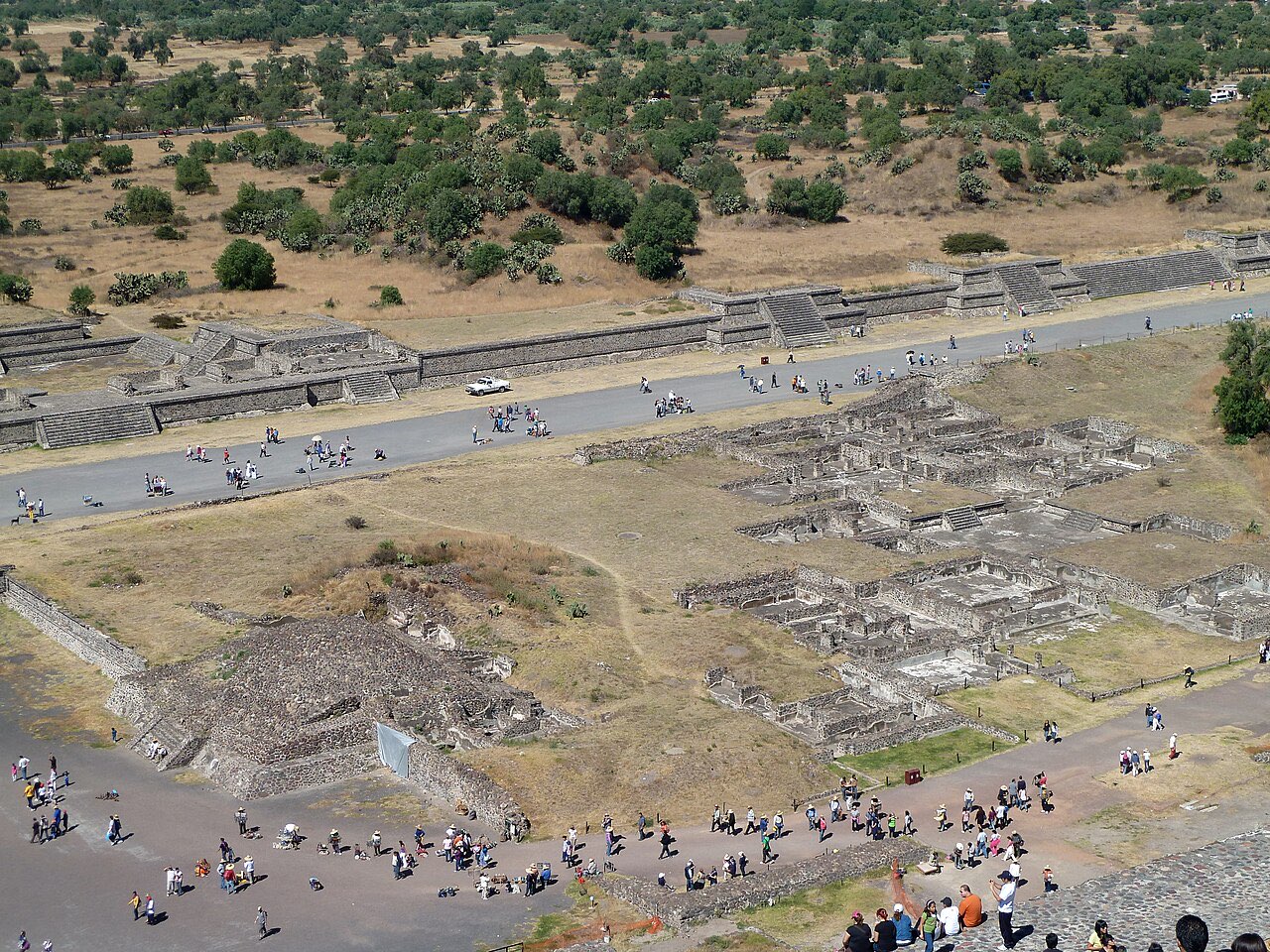
Can you climb the pyramids?
This is the question that changes most, so read it carefully. According to La Jornada, climbing both the Pyramid of the Sun and the Pyramid of the Moon was revoked in 2020 for pandemic, erosion and safety reasons. The Moon Pyramid was reopened to climbers on 19 May 2025 after restoration and the installation of support posts, while the Pyramid of the Sun stayed closed. INAH decides which pyramids may be climbed, after reviewing the condition of the structures.
On 20 April 2026, an armed man attacked tourists at the Pyramid of the Moon, killing a Canadian visitor and wounding others, according to La Jornada. After the attack, the ascent to the Moon Pyramid was shut “until further notice”, and the site reopened on 22 April under a reinforced security operation, with access allowed to the first platform of the Pyramid of the Moon. We could not confirm the current status as of late October 2026. Assume that the Pyramid of the Sun is not climbable, and ask INAH staff at the entrance whether any climb is open that day.
Visitors quoted in the Mexican press after the reopening described it as an isolated case. For the broader picture, read the State Department’s Mexico travel advisory and our Mexico safety guide. Even without climbing, the site is worth the trip: the scale is the point.
What to see, in a sensible order
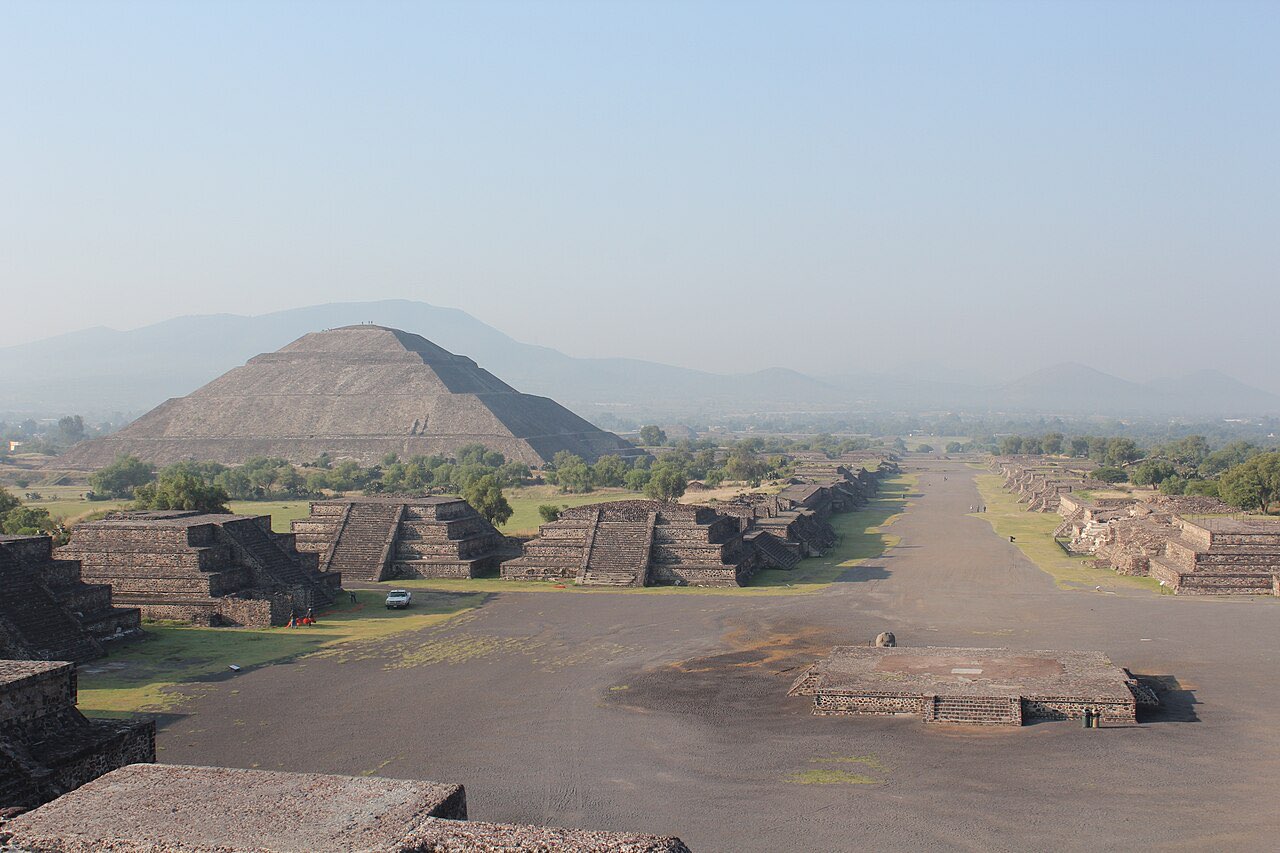
Teotihuacan is organized around the Avenue of the Dead, a long processional road running north to south. The sensible approach is to enter at the gate your bus uses, look at the main sights, and walk the avenue once rather than back and forth.
- Ciudadela and the Temple of the Feathered Serpent (Quetzalcoatl). This large sunken compound is where many routes begin. The temple is known for its carved serpent heads and the reliefs on its facade. The National Museum of Anthropology in Mexico City displays a colored replica of the temple (see our Mexico City museums guide).
- The Avenue of the Dead. The great axis of the city, lined with platforms and palace compounds. Walk it slowly in the morning, before the sun gets strong.
- Pyramid of the Sun. The largest structure on the site. You admire it from the base, since climbing is closed.
- Plaza and Pyramid of the Moon. At the north end, with the best views back down the avenue. Check on the day whether any part of the structure is open.
- Palace complexes and murals. The residential and ceremonial compounds beside the avenue are good for a slower look once the main plazas get busy.
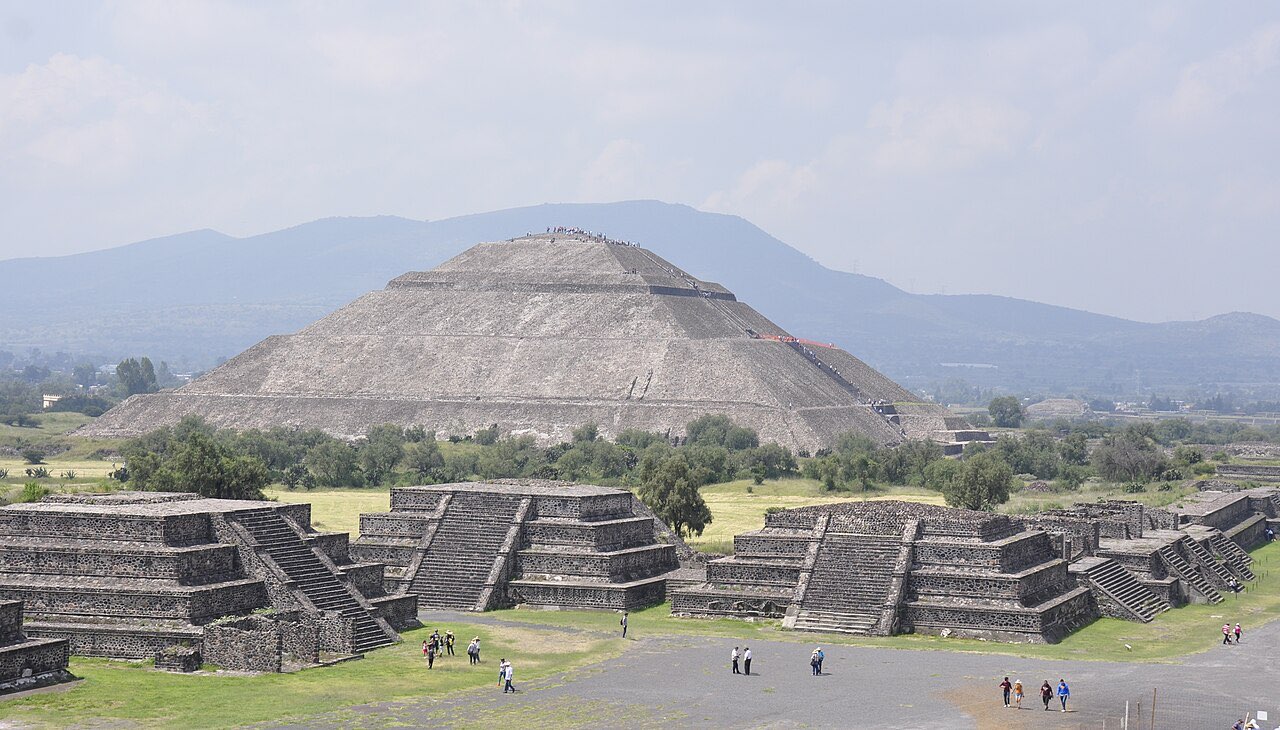
Allow three to four hours on the ground at an easy pace, plus travel. If the site is crowded, INAH itself suggests other nearby archaeological sites such as Tetzcotzingo and Los Melones in the State of Mexico, or Cuicuilco in southern Mexico City.
When to go
Arrive when the gates open at 08:00. Mexico City’s official tourism site notes that the site fills very quickly, especially from 12:00 to 16:00, so an early start gives you cooler temperatures, better light and fewer people on the avenue. Weekends are busier. Sundays are free for Mexican nationals and resident foreigners, which can mean heavy domestic crowds, so a weekday is usually the calmer choice. The equinox in March draws very large crowds: INAH reported 36,255 visitors during the previous year’s equinox operation, and runs a special security and access plan for those days.
The rainy season in central Mexico runs roughly from May to October, according to Visit Mexico, with sunny mornings and cloudier, wetter afternoons. That favors an early start year-round. For the broader seasonal picture, see our best time to visit Mexico guide.
Hot air balloons over the pyramids
Several operators sell sunrise balloon flights over the valley. Their own websites list prices from around 1,990 MXN per person for a flight-only package, up to about 3,750 MXN for private flights, and from roughly 3,300 MXN for shared packages that include transport from Mexico City. Those are operator-posted prices, not official ones, and they change. Flights depend on the weather and are scheduled around dawn, so you will leave Mexico City in the dark. If you book one, ask what is included (breakfast, entry to the ruins, transport), how a weather cancellation is handled and how much you can get back. The balloon ride and the pyramid visit are separate experiences, and you do not need to do both.
A sample day
- 06:30-07:00: Metro to Autobuses del Norte, buy your bus ticket at the windows near Gate 8.
- 08:00-08:30: Arrive at Gate 2 or your gate, buy your ticket and enter at opening.
- 08:30-11:30: Ciudadela, Avenue of the Dead, Pyramid of the Sun from the base, Pyramid of the Moon plaza.
- 11:30-13:00: Shaded palace compounds, then lunch in San Juan Teotihuacán town.
- 13:00-14:00: Return bus, noting the last departure time.
- Afternoon: Back in the city for an easy evening, since the altitude and sun make it tiring.
Back in town, our Mexico City first-timer’s guide covers where to stay and how to organize the rest of your days.
Frequently asked questions
How much does it cost to enter Teotihuacan?
As of October 2026, INAH lists general admission at 210 MXN (roughly 12 USD) and the site open daily from 08:00 to 17:00, with the last entry at 16:30. Mexican nationals and resident foreigners with proof of residence pay half, and are free on Sundays. Check INAH's page before going, because prices and hours are updated by the institute.
Can you still climb the Pyramid of the Sun?
No. Climbing the Pyramid of the Sun has been closed since 2020, and INAH decides whether any pyramid reopens. Access to the Pyramid of the Moon has changed more than once: it reopened in May 2025, was closed after an attack on 20 April 2026, and then partly reopened to the first platform two days later. Ask staff at the entrance what is open on your day.
How do I get from Mexico City to Teotihuacan on my own?
Take the Metro to Autobuses del Norte, then a bus from the ticket windows near Gate 8 marked Pirámides. Mexico City's official tourism site says tickets cost a little over 50 MXN per trip, and buses leave roughly every 10 minutes until around 18:00. Some blogs quote about 80 MXN each way for 2026, so expect a range.
Is a hot air balloon ride over Teotihuacan worth it?
It is an optional splurge. Operators advertise sunrise flights from about 1,990 MXN per person for flight-only, and more for packages with transport from Mexico City. Flights depend on the weather and start very early, so book ahead and ask what the cancellation terms are.
What time should I arrive to avoid crowds and heat?
Be at the gate when it opens at 08:00. Mexico City's official tourism site says the site fills quickly, especially between 12:00 and 16:00, and it is open-air with little shade, so bring water, a hat and sunscreen.
Keep planning
- Mexico 10-Day Itinerary: CDMX, Oaxaca, and a Pacific Beach Finish
A field-tested 10-day first-timer route — 4 days in Mexico City, 3 in Oaxaca, 3 on the coast at Puerto Escondido or Huatulco — with transport and costs per tier.
Updated Aug 2026 - Best Time to Visit Mexico: Regions, Seasons, and Hurricanes
Best time to visit Mexico by region: the dry season (November-April) suits most trips; learn the hurricane dates for the Caribbean and Pacific coasts.
Updated Oct 2026 - Is Mexico Safe for Tourists? An Honest Regional Breakdown
A non-alarmist look at safety in Mexico — how risk varies by region, what US advisories actually mean, taxi and ATM precautions, and the scams to know.
Updated Oct 2026